Sample article - draft content for preview, not yet reviewed for publication. It offers general guidance only and is not professional security advice.
Hospital Security Planning: Key Considerations
Hospitals are open, busy and emotionally charged environments. These considerations help security support patient care rather than get in its way.
Plan for an environment that never closes
Hospitals operate around the clock and serve many groups at once: patients, families, clinicians, support staff, contractors and emergency services. Security planning needs to reflect this complexity rather than treat the site as a single space with a single set of rules.
Begin by mapping how activity changes across the day and night, and where different groups meet. Shift changes, visiting hours and night-time admissions each bring their own considerations.
Give priority to high-pressure areas
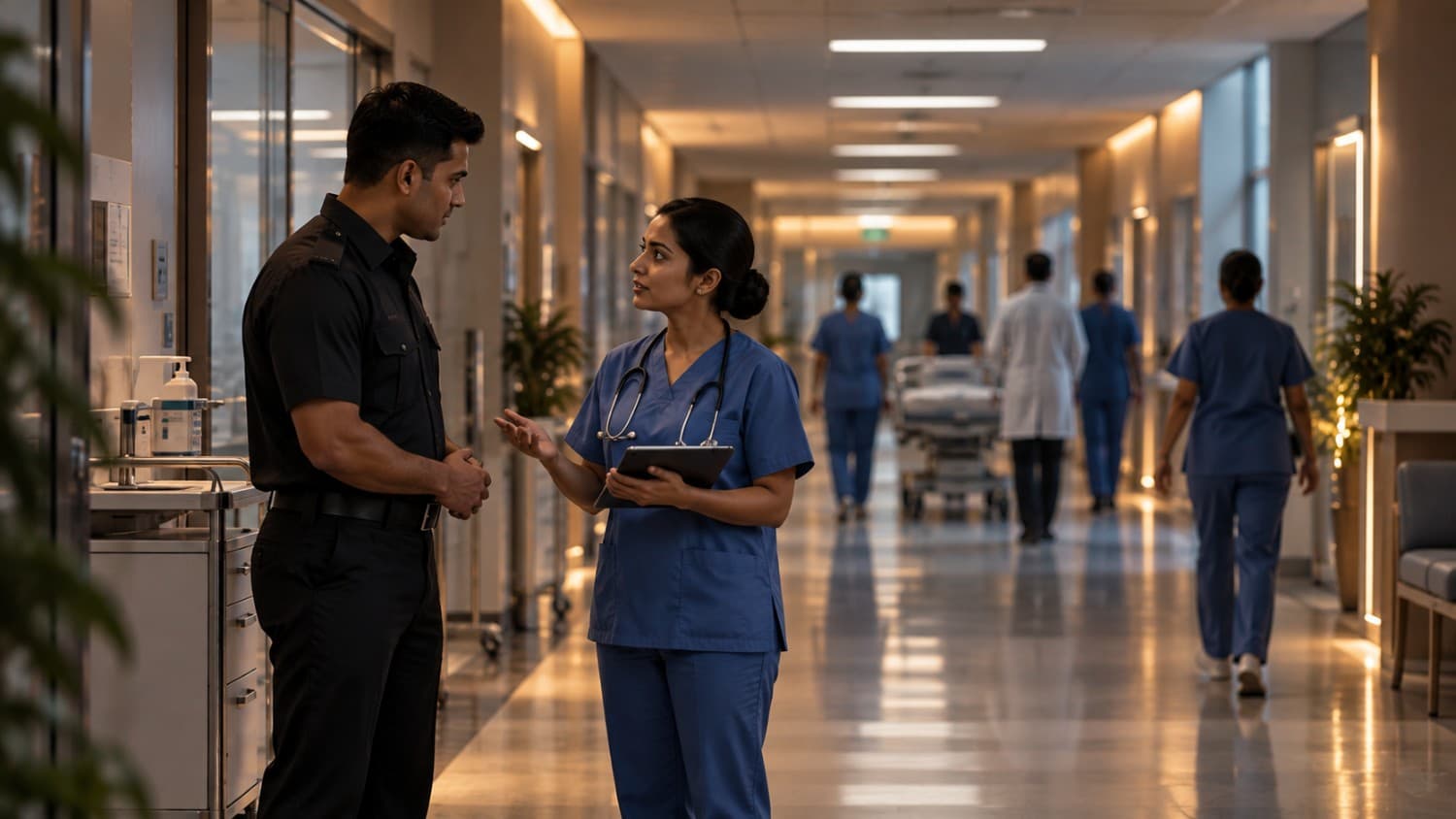
Emergency departments, admissions areas and waiting rooms can become tense, particularly when people are anxious or in pain. Security personnel in these areas need to be calm, approachable and confident in de-escalation.
A visible but unobtrusive presence often does more to maintain order than a heavy-handed one. Agree with clinical leads how and when security should step in, and how staff can call for support quickly.
Manage visitors without adding friction
Families and visitors are an important part of a patient's recovery. Visitor management should be clear and consistent while remaining compassionate, especially in sensitive situations.
- Clear signage and a well-staffed main entrance
- Defined visiting arrangements for wards and specialist units
- A simple process for out-of-hours visitors
- Guidance for personnel on handling distressed relatives
Protect restricted and sensitive areas
Some parts of a hospital need tighter control than others. Pharmacies, medical records, maternity and paediatric units, operating theatres and plant rooms each warrant specific access arrangements.
Work with department heads to agree who may enter, how access is verified, and what should happen if someone is found in an area where they should not be.
Support staff safety
Staff working late shifts, in isolated areas or with challenging patients should know how to summon help and what response to expect. Escorts to car parks, lone-worker check-ins and clear reporting routes all contribute to a safer working environment.
Coordinate with clinical and facilities teams
Security is one part of a wider safety system. Align security procedures with fire safety, evacuation, infection control and major-incident plans, and involve security personnel in relevant drills and briefings so that everyone understands their role when it matters.