
Hospital Security
Hospital Security That Supports Patients, Families and Clinical Teams
Calm, patient-aware security for hospitals, clinics and care facilities: managing visitors and contractors, protecting restricted areas and helping staff defuse difficult situations without disrupting care.
The Security Challenge
Security in an Environment That Never Pauses
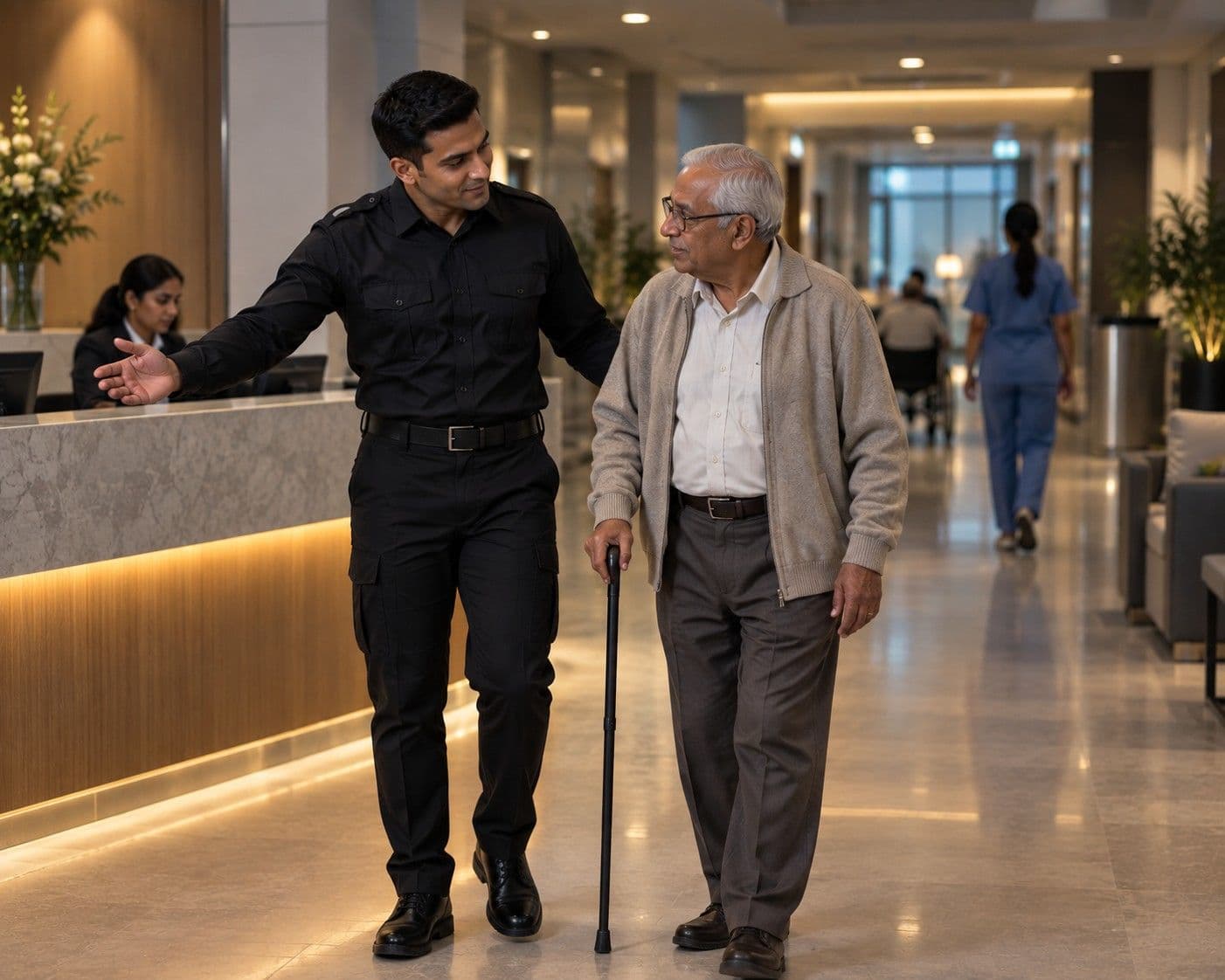
Hospitals run around the clock with open entrances, anxious visitors and staff under sustained pressure. Security has to protect people and property while respecting the dignity of patients and never standing in the way of care.
Emergency department pressure
Long waits, pain, intoxication and grief can escalate quickly. Triage and reception staff need a calm, reassuring presence close by.
Constant visitor and contractor movement
Families, outpatients, suppliers, maintenance crews and delivery drivers pass through the same buildings throughout the day and night.
Restricted and sensitive areas
Pharmacies, intensive care, maternity and paediatric wards, records rooms and medicine stores all require controlled access and careful monitoring.
Patient dignity and privacy
Security personnel regularly witness sensitive moments. Discretion and confidentiality matter as much as vigilance.
Our Approach
How We Plan Hospital Security
Planning starts with your facilities and clinical leads, because effective hospital security depends on understanding how care is delivered on your site.
Walk-through with facilities and clinical leads
We review entrances, the emergency department, wards, restricted areas, car parks and ambulance bays, and learn your visiting hours and pressure periods.
Access and visitor strategy
We recommend how visitors, contractors and suppliers are received and directed, and how restricted areas are protected under your hospital's policies.
Care-environment briefing
Personnel are briefed on de-escalation, patient dignity, infection-control expectations, emergency codes and how to work alongside clinical staff.
Supervised deployment
Supervisors keep a close watch on pressure points such as the emergency department and main reception, and coordinate with duty managers on every shift.
Incident review and refinement
Incidents are documented and discussed with your team, and the plan is refined as departments expand, relocate or change their routines.
Scope of Service
What Hospital Security Can Include
Each duty is written to fit your hospital's policies, reporting lines and clinical priorities.
Entrance and reception security
A welcoming, attentive presence at entrances and help desks that guides visitors and notices concerning behaviour early.
Emergency department support
Visible security near triage and waiting areas to support staff, ease tension and respond promptly when a situation escalates.
Visitor management
Enforcement of visiting hours and visitor limits, pass issue where used, and clear direction to the right wards and departments.
Restricted area access control
Monitoring of access to pharmacies, intensive care, maternity and paediatric units, operating theatres and records rooms.
Contractor and supplier control
Verification, registration and escorting of maintenance teams, suppliers and service providers as your policy requires.
Ward, corridor and grounds patrols
Regular patrols of internal areas, stairwells, car parks and perimeters, including quieter overnight routes.
Ambulance bay and car park management
Keeping emergency access routes clear and managing parking and drop-off around busy entrances.
Support during emergency codes
Assistance to clinical teams during emergency codes, missing-patient searches, fire alarms and evacuations, following your hospital's procedures.
Property and asset protection
Attention to equipment, medicines in transit and lost property, with every incident recorded and reported.
Planning Details
Operational Considerations
Hospital security is shaped by clinical priorities. These are the areas we agree with you in detail before deployment.
- Clinical coordination
- Who security reports to on each shift, how clinical staff call for assistance and how responsibilities are divided during an incident.
- De-escalation and intervention policy
- Your hospital's position on physical intervention is confirmed, and personnel are briefed to put communication and de-escalation first.
- Confidentiality
- Personnel are instructed never to discuss patients, visitors or incidents outside reporting channels, and to protect privacy in public areas.
- Infection control and safety rules
- Hygiene, protective equipment and restricted-zone rules are explained so that security personnel meet the same standards as other staff.
- Vulnerable patients
- Arrangements for paediatric, maternity, elderly and mental health patients, including missing-person protocols, are agreed in advance.
- Continuity between shifts
- Handovers are structured so that information about ongoing situations passes from one shift to the next without gaps.
Why TruRoyal
How TruRoyal Approaches Healthcare Security
The same principles guide every deployment: understand the site, brief the people, supervise the work and report clearly.
Patient-aware conduct
Personnel are briefed to be calm, respectful and discreet, reflecting the sensitivity of a care environment.
Coordinated with clinical staff
Security follows your hospital's procedures and escalation routes, supporting staff rather than working apart from them.
Structured supervision
Supervisors focus on high-pressure areas and make sure standards hold through nights and weekends.
Documented and reviewed
Incidents are recorded clearly, helping your team identify patterns and adjust policies.
FAQs
Questions About Hospital Security
Straightforward answers to the questions organisations ask most often before planning this service.
Related Services
Explore Related Services

Let's Build a Security Plan Around Your Needs.
Tell us about your site, your people and your operations. Our security team will review your requirement and recommend a practical plan.