
Industrial Security
Industrial Security for Factories, Warehouses and Logistics Sites
Perimeter, gate and material-movement control for industrial operations, with disciplined vehicle checks, contractor management and patrols that keep pace with shift changes and continuous production.
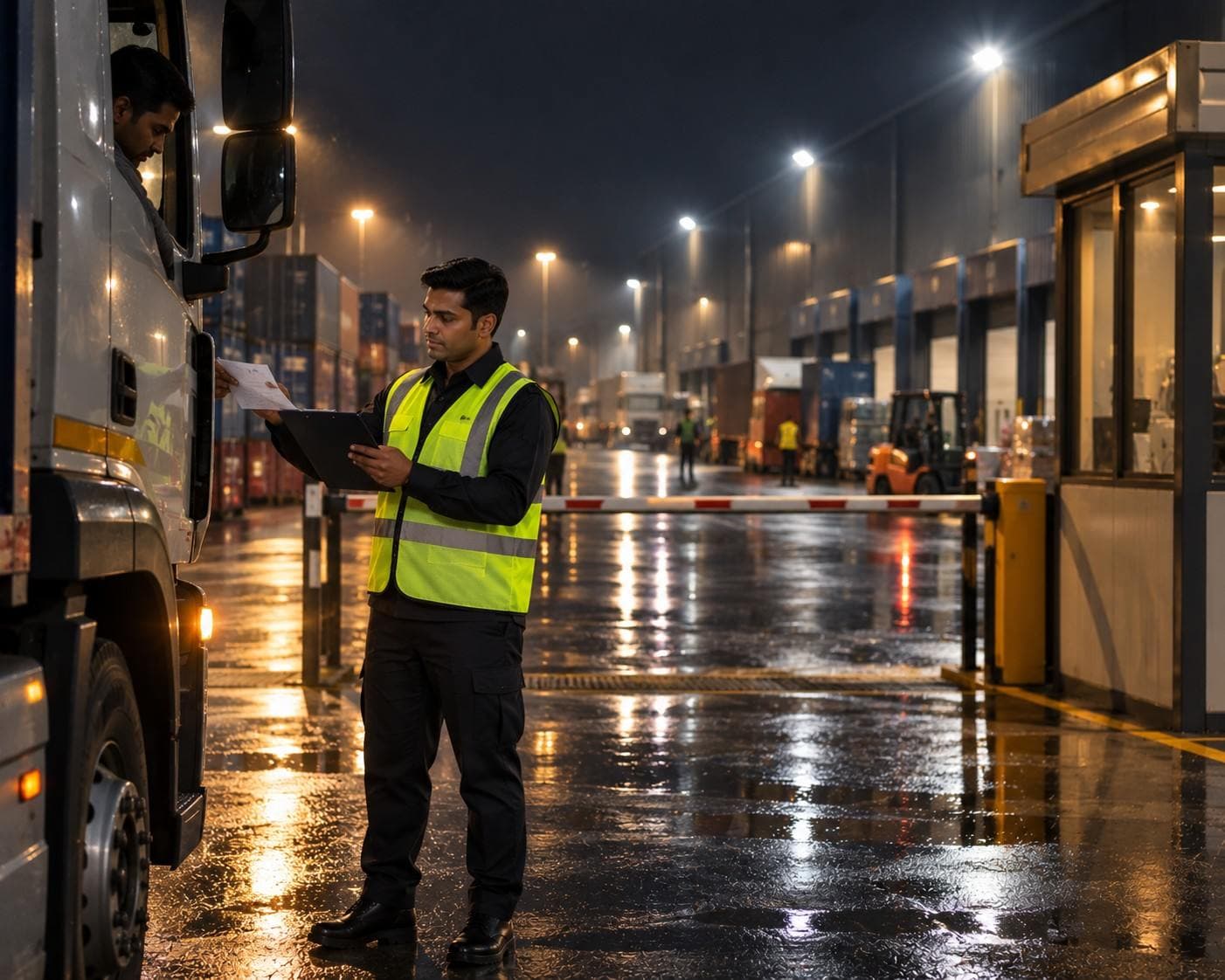
The Security Challenge
Large Sites, Constant Movement
Industrial facilities combine wide perimeters, heavy vehicle traffic, valuable materials and large workforces on rotating shifts. Security has to control what enters and leaves without slowing production.
Material and inventory loss
Raw materials, finished goods, scrap and tools can leave through gates, loading bays or gaps in the perimeter when movement is not checked.
Gate and vehicle congestion
Lorries, contractor vehicles, staff buses and two-wheelers converge on the gates, particularly during dispatch windows and shift changes.
Contractors and temporary labour
Short-term workers and contractor crews need verification, induction and supervision, especially near hazardous areas.
Extended perimeters
Boundary walls, fences, yards and open storage are hard to watch, above all at night and over weekends.
Our Approach
How We Plan Industrial Security
We work with your plant, warehouse or logistics management to understand production flows, dispatch schedules and site hazards before recommending coverage.
Site and process survey
We review gates, weighbridges, loading docks, stores, perimeters, hazardous zones and shift timings with your operations and safety teams.
Gate, vehicle and material procedures
We recommend checking routines for vehicles, gate passes, returnable and non-returnable materials, and scrap movement.
Safety-aware briefing
Personnel are briefed on your site safety rules, protective equipment, hazardous-area restrictions and emergency procedures.
Supervised shift operations
Supervisors manage shift changeovers, patrol checks and gate discipline, and liaise directly with plant and warehouse managers.
Reporting and loss review
Registers, discrepancy reports and patrol logs are shared regularly and used to tighten procedures wherever gaps appear.
Scope of Service
What Industrial Security Can Include
Duties are written around your documentation, dispatch rhythm and safety rules.
Main gate and access control
Control of entry and exit for employees, contractors, visitors and vehicles in line with your access rules.
Vehicle inspection and logging
Checks and records of incoming and outgoing vehicles, seals, drivers and accompanying documents.
Gate pass and material control
Verification of materials against gate passes, delivery notes and returnable material records.
Shift changeover management
Orderly entry and exit during shift changes, including checks on belongings wherever your policy requires them.
Perimeter and yard patrols
Foot and vehicle patrols of boundaries, storage yards, scrap areas and the remote corners of the site.
Contractor registration and induction support
Verification of contractor workers, pass issue and support for your safety induction process.
Loading dock and warehouse security
Observation of loading, unloading and dispatch, with attention to discrepancies and unauthorised access.
Fire and emergency support
Assistance during fire alarms, evacuations and emergencies, working with your safety officers and emergency response team.
Key and register management
Control of keys and upkeep of visitor, material and incident registers as your procedures require.
Planning Details
Operational Considerations
Industrial sites vary widely. These factors decide how security is staffed and briefed on yours.
- Hazardous-area awareness
- Personnel are briefed on restricted zones, permit-to-work rules, protective equipment and the areas they must not enter.
- Production and dispatch schedules
- Gate staffing is matched to busy dispatch windows and shift timings to avoid queues at the gate.
- Documentation formats
- Gate passes, delivery notes and registers differ between organisations, so personnel are taken through your formats before deployment.
- Workforce relations
- Employee and contractor checks are carried out respectfully and consistently to avoid friction on the shop floor.
- Remote and poorly lit areas
- Lighting, patrol routes and communication are planned for large perimeters and areas far from the main gate.
- Coordination with safety teams
- Emergency roles are defined alongside your safety officers and emergency response team.
Why TruRoyal
How TruRoyal Approaches Industrial Site Security
The same principles guide every deployment: understand the site, brief the people, supervise the work and report clearly.
Process-minded
Gate and material procedures are designed around how your site actually receives and dispatches goods.
Safety-aware
Personnel respect your safety rules and understand the hazards of an operational site.
Focused on changeovers
Supervision concentrates on shift changes and night operations, where lapses are most likely.
Traceable records
Registers and discrepancy reports help your team trace issues and strengthen controls.
FAQs
Questions About Industrial Security
Straightforward answers to the questions organisations ask most often before planning this service.
Related Services
Explore Related Services

Let's Build a Security Plan Around Your Needs.
Tell us about your site, your people and your operations. Our security team will review your requirement and recommend a practical plan.