
Event Security
Event Security From Entry Screening to Safe Exit
Planned security for conferences, product launches, weddings, concerts and public gatherings, covering screening, accreditation, crowd flow and emergency egress in close coordination with organisers and venue teams.
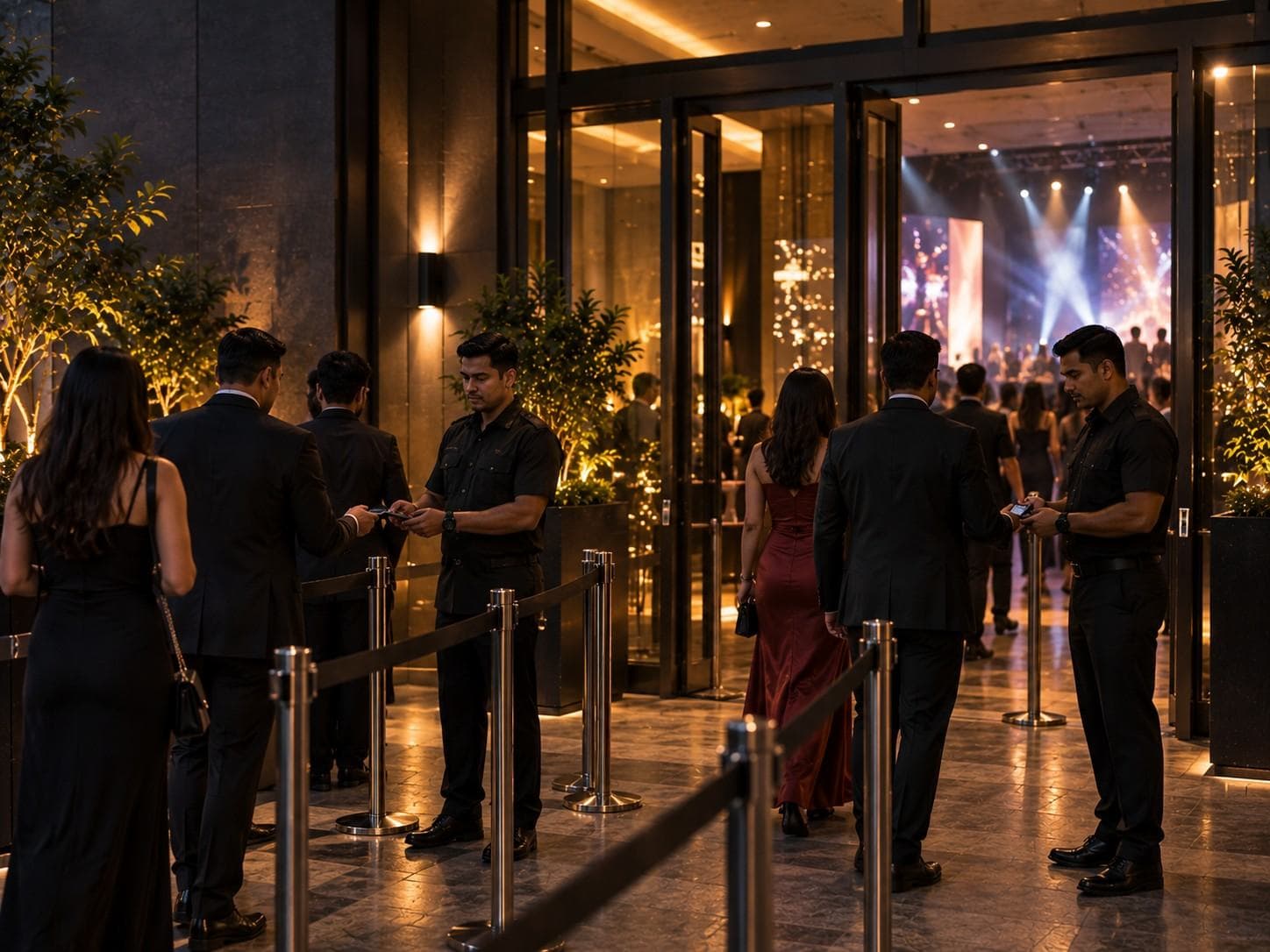
The Security Challenge
Every Event Is a Temporary Town
Events bring large numbers of people together for a short time, often at venues that are new to the organisers. Security has to be designed, staffed and briefed quickly, and has to work first time.
Entry bottlenecks
Screening, ticketing and accreditation can create long queues and crowd pressure at the gates if they are not planned carefully.
Crowd density and movement
Stages, bars, exhibition stands and exits create pinch points where crowding can quickly become unsafe.
Many stakeholders, many access levels
Organisers, venue management, production crews, suppliers, performers, media and guests all need different levels of access.
Emergency egress
Evacuation routes, medical access and emergency vehicle routes must stay clear for the entire event.
Our Approach
How We Plan Event Security
We work with organisers and venue teams from the early planning stage, so that security is built into the event rather than added at the end.
Event brief and venue review
We learn the event format, expected audience, schedule and guest profile, and review the venue layout, entrances and exits.
Security and crowd plan
We recommend screening points, accreditation zones, crowd flow, staffing positions and emergency arrangements.
Pre-event briefing
Personnel are briefed on the running order, access levels, prohibited items, escalation contacts and evacuation routes.
Live event operations
Supervisors coordinate with organisers and venue staff throughout, moving positions as crowds build, circulate and disperse.
Close-down and debrief
Security continues through egress, load-out and venue handover, followed by a debrief on incidents and lessons for future events.
Scope of Service
What Event Security Can Include
Staffing and duties are shaped to the format, audience and venue of each event.
Entry screening
Bag checks and screening at entry points in line with the organiser's prohibited-items policy and venue rules.
Ticketing and accreditation control
Checks of tickets, wristbands and passes, with zone-based access for staff, suppliers, media and guests.
Crowd flow management
Personnel positioned at pinch points, stages, barriers and exits to keep movement safe and orderly.
Backstage and restricted areas
Protection of green rooms, production areas, hospitality lounges and equipment stores.
VIP and speaker movements
Coordinated arrival, movement and departure of speakers, performers and dignitaries.
Parking and traffic coordination
Management of arrival and departure traffic, drop-off zones and parking areas together with venue teams.
Emergency egress support
Keeping emergency routes clear and supporting evacuation in coordination with the venue and emergency services.
Medical and lost-person support
First response and escalation to on-site medical teams, and procedures for lost children or separated guests.
Build-up and overnight security
Protection of the venue, stages and equipment during set-up, overnight and load-out.
Planning Details
Operational Considerations
No two events are alike. These are the factors that shape the security plan for yours.
- Audience profile
- A corporate conference, a wedding and a music festival call for very different security postures and staffing.
- Venue rules and constraints
- Each venue has its own access points, capacity arrangements and procedures, and the plan is built around them.
- Organiser policies
- Prohibited items, re-entry rules, dress codes and guest-list procedures are confirmed and included in the briefing.
- Communication on the day
- Radio channels, contact lists and decision-makers are agreed in advance so that issues are resolved quickly.
- Weather and timing
- Outdoor settings and late finishes affect crowd behaviour, lighting and egress, and are planned for accordingly.
- Permissions and conditions
- Organisers typically hold the permissions for an event, and security arrangements are planned to work within any conditions attached to them.
Why TruRoyal
How TruRoyal Approaches Event Security
The same principles guide every deployment: understand the site, brief the people, supervise the work and report clearly.
Planned, not improvised
Security is designed with organisers and venues well ahead of the event.
Briefed for your event
Personnel know the schedule, access levels and escalation routes before the doors open.
Scaled to the occasion
Staffing is shaped to the size and format of the event, from private functions to public gatherings.
Coordinated on the day
Supervisors stay in contact with organisers and venue staff from build-up to close-down.
FAQs
Questions About Event Security
Straightforward answers to the questions organisations ask most often before planning this service.
Related Services
Explore Related Services

Let's Build a Security Plan Around Your Needs.
Tell us about your site, your people and your operations. Our security team will review your requirement and recommend a practical plan.